Originally published: December 2022
Last updated: May 2026
An unexpected gust of wind during a field goal. The glare of the sun in the players’ eyes. Wind-driven rain creating havoc for spectators.
Mother Nature doesn’t always understand home field advantage. Believe it or not, thoughtful stadium design can mitigate unwanted weather interference during a game. A stadium design anchored by an in-depth understanding of the external climate, and the microclimate it created can enhance play-of-the-game as well as the comfort level of fans and athletes alike.
Stadium designers and engineers can leverage advanced analysis tools to help venues not only become iconic landmarks but also deliver a world-class experience for spectators and elite athletes, especially during high-profile events like the FIFA World Cup or the Olympics.
Understanding the microclimate and designing thoughtfully for occupant comfort is what separates a functional venue from a truly exceptional sports venue design.
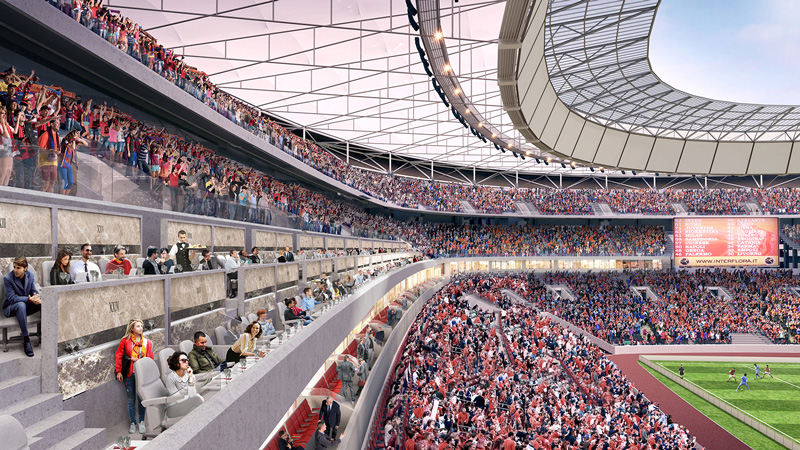
What is Thermal Comfort in Stadium Design?
Thermal comfort assesses a mix of personal and environmental factors that determine an individual’s comfort level, specifically their satisfaction or dissatisfaction with their thermal environment. For stadium engineers, this means studying the spectator microclimate to strike the right balance between exposure to sun, wind, precipitation, and for conditioned spaces, air temperature.
This is not a passive consideration. It requires active analysis during the design process to understand how a venue’s geometry, orientation, and material choices will interact with local weather conditions — and it is one of the most important investments a sports venue design team can make early in a project.
Why Should Stadium Designers Consider Thermal Comfort?
Thermal comfort in stadium design directly affects two groups: the fans in the stands and the athletes on the field, and the design decisions that impact one often affect the other.
A stadium that’s too hot or too windy can degrade athlete performance. Wind can alter the trajectory of a ball, create a tailwind or headwind that advantages or disadvantages athletes, and in extreme cases, affect the outcome of a match. At the same time elements like extreme heat, solar glare, or rain can make the spectator experience miserable, driving down attendance, reducing dwell time, and damaging a venue’s long-term reputation.
Engineers can simulate and test the impacts of several environmental factors before construction begins and recommend stadium design changes that optimize the space for everyone who will use it.
Key Thermal Comfort Factors for Stadium Design?
When evaluating microclimate for a sports venue design, here are the critical environmental and personal factors every stadium engineer should consider:
1. Temperature & Humidity
Ambient temperature and humidity are foundational to any stadium design comfort analysis. Understanding the humidity profile of a venue’s location is particularly important for athlete performance: high humidity reduces an elite athlete’s ability to evaporate sweat and regulate body temperature, directly impacting performance and safety.
By understanding both the climatic environment and the physiological response of the human body to that environment, engineers can determine what conditions the design must achieve to create an ideal experience across the venue.
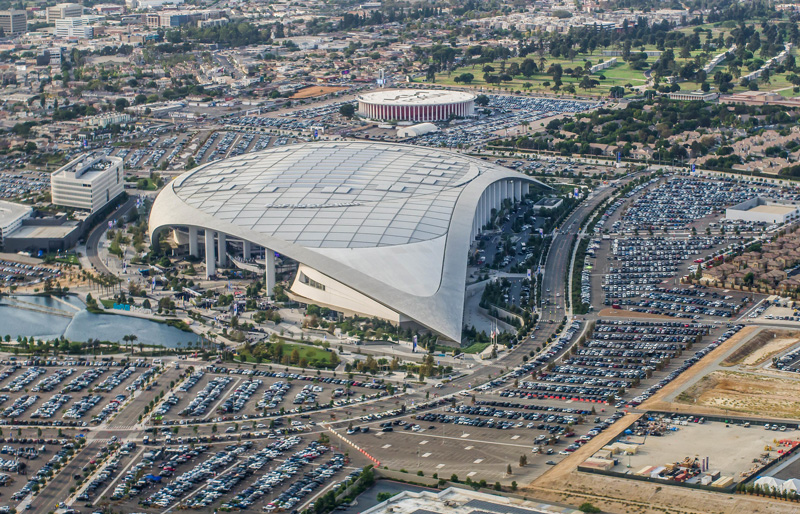
Some stadiums incorporate active cooling while others leverage natural stadium ventilation. Natural stadium ventilation requires a thorough understanding of the climate, prevailing weather patterns, and on-site wind behaviour. SoFi Stadium in Los Angeles is a strong example: it’s architecture was designed to leverage the predominant coastal breeze to promote natural air movement throughout the partially enclosed venue.
2. Heat Stress & WBGT
In certain climates, heat intensity can have profound consequences on the health and performance of pro athletes. Tennis, for instance, can have extremely long matches, sometimes spanning hours or even days. In 2014, the Australian Open saw some players and fans alike experiencing heat stroke symptoms from the extreme heat during the event.
WBGT-based heat stress analysis is the primary tool engineers and sports organizations use to quantify heat-related risk in outdoor and semi-outdoor venues.
To avoid frequent interruptions in a match, a well-designed stadium should consider how microclimate, including extreme heat, will impact the people occupying that space.
WBGT (Wet Bulb Globe Temperature) is an adjusted temperature scale that accounts for temperature, humidity, wind speed, and solar radiation, making it a far more accurate measure of perceived heat stress than air temperature alone. Most major sports organizations have established WBGT-based heat criteria. For example:
- FIFA classifies heat risk as high above 29.4°C WBGT and extreme above 32.2°C, with mandatory cooling breaks above 32°C
- The American College of Sports Medicine recommends rescheduling distance running events when WBGT exceeds 27.8°C
Integrating WBGT heat stress analysis early in stadium design allows engineers to recommend shading strategies, orientation adjustments, and ventilation approaches that keep conditions within safe thresholds — reducing event interruptions and protecting the venue’s reputation.
3. Wind
Wind can, of course, impact a stadium’s structure, but it is also important to consider the effects of wind on the fans and sometimes even the game itself.
Tailwinds and headwinds, for instance, can give elite runners an advantage or disadvantage. In fact, world records take wind into account. Wind affects how a baseball travels, whether a field goal attempt drifts wide, or how a ski jumper’s flight is influenced at takeoff.
With detailed wind analysis built into the stadium design process, engineering teams can help venue owners understand the wind environment their athletes and fans will experience, and in some cases, inform design choices that ensure a neutral playing environment and experience.
4. Solar Exposure and Glare

How solar energy is absorbed and reflected by the materials of a stadium can significantly affect occupant comfort. Solar heat gains will exacerbate discomfort and solar glare can impair the vision of spectators players, officials and even broadcast cameras. Stadiums can incorporate shade canopies or retractable roofs to shield occupants from direct sun but this often needs to be balanced against costs and allowing sunlight to reach the field for the health of natural turf playing surfaces. Computational modeling helps designers understand and balance these competing factors across different times of day and seasons.
5. Personal Factors:
How people respond to their environment also impacts thermal comfort. The key personal factors stadium designers looking to engineer a good venue should consider are:
Individual Expectations
Fans need a comfortable environment, but different fans have varying expectations and therefore different comfort levels. Diehard fans will go out in rain or shine and stand in downpours or gusts of wind – this even becomes part of the experience for them. In other words, standing in the rain or sitting in a stand covered in snow is a part of showing one’s dedication to the team.
However, the expectations are vastly different for those once-in-a-while spectators. FIFA World Cup, the Olympics, and the Commonwealth Games, are world-class events and attract people who expect a certain kind of experience when it comes to their personal comfort at the event.
These expectations are compounded by the design of a stadium. Patrons will have higher expectations for stadiums that are highly or fully enclosed compared to open-air facilities.
Activity Level & Metabolic Rate
Thermal comfort is also determined by activity level and metabolic rate. Athletes exert significantly more energy than spectators, producing far more body heat. Microclimate analysis accounts for this distinction explicitly. Thermal conditions that could be appropriate for a patron waiting in line to enter may not be once they are on their feet cheering. The extreme heat output of athletes makes them more susceptible still.

Clothing
From fans to players, the different individuals who use stadiums are doing so for different purposes, and their clothing reflects that. Athletes may be wearing moisture wicking or performance clothing designed for activity while fans, depending on the season, may be in t-shirts or winter coats. Clothing can impact an individual’s thermal comfort.
Engineering Tools for Stadium Microclimate and Ventilation Analysis
Two primary tools drive rigorous microclimate evaluation and stadium ventilation optimization in sports venue design:
CFD Simulation
Computational Fluid Dynamics (CFD) simulation models the airflow behaviour inside and around a venue under a range of wind conditions. It can reveal how wind enters and moves through a stadium bowl, identify zones of stagnation or excessive exposure, and evaluate the performance of proposed design changes before construction begins. For stadium airflow analysis, both CFD and physical wind tunnel testing are established approaches — though CFD is often better suited to interior environments, where the scales involved make wind tunnel testing impractical and where capturing the effects of mechanical ventilation systems is essential. The wind results from CFD then serve as one of several inputs into further computational analyses examining impacts on ball trajectory, rain ingress, and thermal comfort.
Microclimate and Thermal Comfort Modeling
Coupled with CFD, thermal comfort modeling applies WBGT heat stress indices and other measures to quantify the human-perceived experience across different seating zones and field positions. This allows engineers to evaluate not just whether a stadium design is structurally adequate, but whether it will actually deliver the intended experience for spectators and athletes under realistic weather conditions.
The Takeaway: What Makes a Stadium Design Great?
Good stadiums give everyone an equitable view of the field, and keep fans, athletes, and performers safe and comfortable in all climates and weather. World-class sports venue design provides comfortable temperatures, effective stadium ventilation, shade, and protection from wind and rain.
With expert microclimate analysis, WBGT heat stress assessment, wind and CFD simulation, and stadium ventilation engineering, design teams can take a venue’s performance to the level that matches the ambition of its architecture.