Extended producer responsibility (EPR) programs in Canada have moved well past the policy discussion stage. From British Columbia’s long-running program to Nova Scotia’s December 2025 launch, producers selling packaged goods in Canada are now managing active compliance obligations across nearly every province and territory.
Unlike the United States, where most packaging EPR programs are still in early implementation, Canada already has programs collecting fees and data across most of the country. The Canada-wide Action Plan for Extended Producer Responsibility established a national policy direction, but regulations, reporting requirements, material scopes, exemption thresholds, and Producer Responsibility Organizations (PROs) are set at the provincial and territorial level. For companies selling nationally, that means navigating a different set of rules in nearly every province and territory they operate in.
Producers that are new to regulatory frameworks may benefit from reviewing the basics of extended producer responsibility before evaluating province and territory specific requirements.
This guide covers the status of packaging EPR programs across Canada, what is changing in 2026, and where producers most commonly run into compliance problems.
EPR Programs in Canada by Province and Territory
The sections below outline the status of each provincial and territorial program, with notes on recent regulatory changes and what producers should be aware of.
British Columbia
British Columbia’s packaging EPR program has been running longer than most in Canada and is one of the broadest in scope. Operated by Recycle BC, and administered by Circular Materials, the program covers a wide range of materials and places full financial responsibility on producers.
New to the province, BC’s framework introduces a broader material scope that goes beyond traditional packaging to include single-use products (SUPs) and consumer-purchased packaging materials like aluminum foil and plastic wrap.
Key requirements for producers include:
- Registering with Recycle BC
- Paying EPR fees to fund collection and recycling systems
- Supplying annual data across a broad range of materials, including:
-
- Packaging and printed paper
-
- Single-use products (e.g., straws, utensils, cups, paper bags)
-
- Packaging-like products (e.g., recycling bags, aluminum foil products, bubble wrap, LPDE/HDPE films)
- Maintaining accurate records of materials supplied into BC
Exemptions apply if at least one of the following is met:
- Less than $1 million in gross annual revenue
- Less than 1 tonne of supplied material
- Single retail store operation
- Charitable organization
Alberta
Alberta’s packaging EPR program is administered by the Alberta Recycling Management Authority (ARMA), with Circular Materials operating as a Producer Responsibility Organization (PRO) in the province.
Phase 1 of the program launched in April 2025 and applies to communities with existing recycling services, while Phase 2 is scheduled for October 2026 and will expand the program to communities without current recycling infrastructure.
Alberta’s definition of single-use products is broad, capturing party supplies and any item ordinarily disposed of after short-term use.
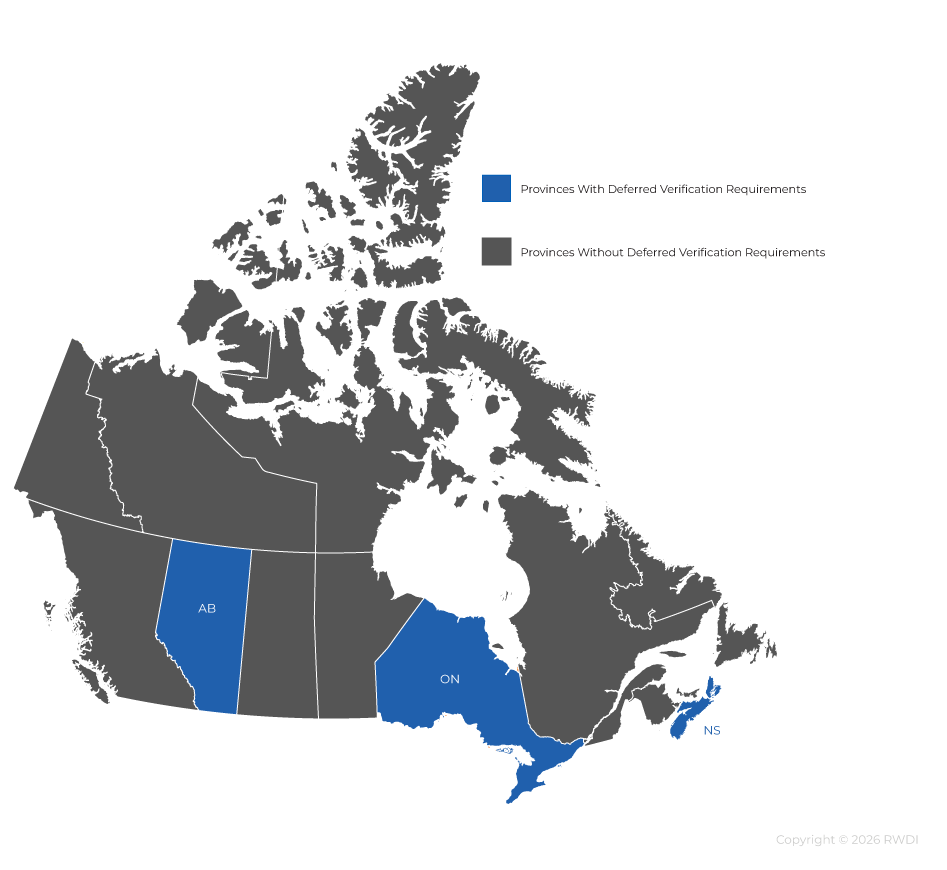
One important update to note is that ARMA has deferred third-party verification for the 2026 reporting cycle. Producers reporting 2025 supply data in 2026 will submit an attestation form instead. Full verification requirements are expected to resume with the 2027 cycle.
Key requirements for producers include:
- Registering separately with ARMA and Circular Materials
- Reporting annual supply data for:
-
- Packaging
-
- Paper products
-
- PLPs
- Paying EPR fees to support residential recycling systems
- Tracking and reporting a broad range of materials, including:
-
- Single-use products (e.g., party supplies, short-lived items)
-
- Consumer-facing packaging materials
- Monitoring whether they exceed both revenue and material thresholds
- Submitting an attestation for 2025 supply data (reported in 2026) in place of third-party verification
Obligation thresholds (must meet both revenue + material criteria):
- Revenue: $1.5 million or more annually
- Material supplied (residential):
-
- 9 tonnes paper
-
- 2 tonnes rigid plastic
-
- 2 tonnes flexible plastic
-
- 1 tonne glass
-
- 1 tonne metal
Saskatchewan
Saskatchewan’s packaging and paper products EPR program is delivered through SK Recycles (formerly Multi-Material Stewardship Western) in partnership with Circular Materials also operating as a PRO in the province.
The program follows a similar structure to BC and Alberta, covering packaging, paper products, and packaging-like products.
Saskatchewan defines packaging-like products broadly, capturing a range of consumer-purchased items used for packaging or storage, notably including paper gift bags, resealable plastic bags, and plant pots and trays.
It’s also important to note that Saskatchewan’s program has recently transitioned from a provincial residency requirement to a national residency model, which may bring producers that were previously exempt into the program’s scope.
Key requirements for producers include:
- Registering with Circular Materials
- Reporting annual supply data for:
-
- Packaging
-
- Paper products
-
- PLPs
- Paying EPR fees to fund residential recycling programs
- Tracking and reporting materials across a broad scope, including:
-
- Consumer packaging
-
- Paper products
-
- Packaging-like products used for storage, protection, or transport
- Maintaining accurate records of materials supplied into Saskatchewan
Exemptions apply if at least one of the following is met:
- Less than $1 million in gross annual revenue
- Less than 1 tonne of supplied material
- Charitable organization
Manitoba
Manitoba’s packaging EPR program is administered by Multi-Material Stewardship Manitoba (MMSM), which oversees producer compliance and program delivery in the province.
Manitoba’s program currently covers packaging and paper products only. SUPs and PLPs are not included, though this may change as the program evolves.
Key requirements for producers include:
- Registering with MMSM
- Reporting annual supply data for:
-
- Packaging
-
- Paper products
- Paying EPR fees to support residential recycling programs
- Tracking and maintaining accurate records of materials supplied into Manitoba
Exemptions apply if at least one of the following is met:
- Less than $750,000 in gross annual revenue
- Less than 1 tonne of supplied material
- Charitable organization
Ontario
Ontario has the most complex and highest-profile packaging EPR program in Canada, transitioning to a full Individual Producer Responsibility (IPR) model under the oversight of the Resource Productivity and Recovery Authority (RPRA).
Through the Blue Box program, producers are fully responsible for funding and operating the residential recycling system.
Key requirements for producers include:
- Registering with RPRA and any of the following PROs. RPRA must be made aware of the selected PRO
- Reporting annual supply data for:
-
- Packaging
-
- Paper products
-
- SUPs
-
- PLPs
- Funding and operating the residential Blue Box recycling system
- Meeting all producer responsibility obligations under the IPR model
- Maintaining accurate records of materials supplied into Ontario
Quebec
Quebec’s packaging EPR program is managed by Éco Entreprises Québec (EEQ), the designated PRO for containers, packaging, and printed paper.
Quebec is transitioning to a full Individual Producer Responsibility (IPR) model, similar to Ontario’s, under which producers will cover 100% of curbside recycling system costs. Under the previous model, producers partially reimbursed municipalities; the new structure eliminates that shared-cost arrangement.
Quebec’s program uses an eco-modulation model, where fees vary based on material recyclability and environmental impact. This creates a clear financial incentive for a more recyclable packaging design. Quebec is also the only province to offer credits for reusable packaging and the use of post-consumer recycled content.
Key requirements for producers include:
- Registering with EEQ
- Reporting annual supply data for:
-
- Containers and packaging
-
- Printed paper
-
- PLPs
-
- Storage bags and wrapping paper
-
- Paper and polystyrene cups
-
- Single-serving containers
-
- Coffee pods
-
- Paper plates and butcher paper
- Paying eco-modulated EPR fees based on material type and recyclability
- Funding 100% of the residential curbside recycling system under the IPR model
- Tracking and maintaining accurate records of materials supplied into Quebec
Exemptions:
- Producers with less than $1.3 million in Quebec revenue may qualify for exemption
- Previous flat-fee-based exemption has been eliminated
New Brunswick
New Brunswick’s packaging EPR program has been transitioning in phases since late 2023, with a new stewardship plan taking effect as of January 1, 2026. The program is overseen by Recycle NB and administered in partnership with Circular Materials.
The province is planning several operational updates including the introduction of a harmonized material list in 2027 and a transition to bi-weekly household collection expected in Q3 2026.
Key requirements for producers include:
- Registering with RecycleNB (no reporting required) and Circular Materials
- Reporting annual supply data for:
-
- Packaging
-
- Paper products
-
- SUPs
-
- PLPs
- Paying EPR fees to support residential recycling services
- Tracking and maintaining accurate records of materials supplied into New Brunswick
- Monitoring upcoming regulatory and operational changes (e.g., harmonized material list)
Exemptions apply if at least one of the following is met:
- Less than $2 million in gross annual revenue
- Less than 1 tonne of supplied material
- Charitable organization
Nova Scotia
Nova Scotia launched its packaging EPR program in 2025, administered by Divert NS, with Circular Materials serving as the PRO.
The province continues to operate a dual-stream blue bag collection system and has introduced a standardized, province-wide materials list.
As of January 1, 2025, Divert NS has confirmed that uncoated paper plates and bowls are no longer designated materials, as they are considered likely to be contaminated during use and therefore unsuitable for recycling. No reporting adjustments are required for producers who have already submitted data.
Key requirements for producers include:
- Registering with DivertNS and Circular Materials
- Reporting annual supply data for:
-
- Packaging
-
- Paper products
-
- SUPs
-
- PLPs
- Paying EPR fees to fund province-wide recycling services
- Maintaining accurate records of materials supplied into Nova Scotia
- Contacting Divert NS for clarification on verification requirements
- Verification requirements have been deferred (similar to Alberta and Ontario)
Yukon
The Yukon’s packaging EPR program is one of the newest in Canada, with Phase 1 launching November 1, 2025 and Phase II scheduled for May 2027.
The program covers curbside collection, depot systems, multi-family dwellings, schools, institutions, and post-collection services. Despite the territory’s small population, producer participation is relatively high with 124 active producers registered, including 43 voluntary participants.
The Yukon is also part of a broader regulatory shift, with additional EPR programs for materials such as batteries, used oil, paper and packaging, and hazardous and special products being introduced in close succession. However, this has created overlapping compliance obligations for producers operating in the territory.
Key requirements for producers include:
- Registering as a producer (including voluntary registration where applicable)
- Reporting annual supply data for obligated materials
- Paying EPR fees to support collection and post-collection systems
- Participating in program services across:
-
- Curbside collection
-
- Depot collection
- Multi-family, institutional, and school systems
- Maintaining accurate records of materials supplied into Yukon
- Ensuring compliance across multiple overlapping EPR programs where applicable
Producers may be exempt if they meet at least one of the following:
- Less than $1 million in gross annual revenue
- Less than 1 tonne of supplied material
- Charitable organization
Where Producers Get EPR Compliance Wrong in Canada
For companies operating nationally, the challenge with Canadian EPR compliance is not just understanding the rules, but applying them consistently across multiple programs without gaps, misclassification, or reporting drift.
In practice, most compliance issues we see stem from three areas: ensuring no double reporting through the supply chain, missing obligated materials if they aren’t associated with product sales, and data systems that cannot track products to the final consumer.
Addressing these early is critical, as errors tend to compound across jurisdictions and reporting cycles. Many organizations rely on EPR compliance specialists to standardize these elements across provinces and reduce exposure to reporting errors, audit risk, and unnecessary fee variance.
Obligation is Jurisdictional
Across Canada, EPR programs use a cascading hierarchy to determine the obligated producer, with some variation by province. In general, responsibility sits first with the brand owner or trademark holder in Canada. In some provinces, such as British Columbia and Manitoba, this entity must also have a physical presence in the province. If no qualifying brand owner exists, responsibility typically shifts to the first importer into the province. Where neither applies, the obligation falls to the retailer or the company that supplies or commissions the product under its own brand.
This becomes particularly important for multinational supply chains. A U.S.-based brand selling into Canada may still hold full provincial responsibility, even where distribution is handled by a local partner. Misidentifying the obligated entity can lead to incomplete registrations, misreported volumes, and downstream audit exposure across multiple provinces.
Scope Gaps Commonly Occur in “Non-Packaging” Categories
One of the most common compliance gaps we see in Canada is the underreporting of SUPs and PLPs. These categories don’t exist in most other jurisdictions’ reporting frameworks, so producers new to Canadian EPR often miss them entirely.
SUPs include items such as straws, cutlery, plates, cups, and other foodservice accessories. PLPs include consumer-facing packaging materials such as sandwich bags, foil, parchment paper, storage bags, and protective materials like bubble wrap.
Several provinces include variations of these categories in their reporting requirements, though definitions differ by jurisdiction. As a result, compliance requires SKU-level classification aligned to each provincial framework.
Data Deferrals Are Not Risk Reduction
Recent deferrals of supply data verification requirements in provinces such as Alberta, Ontario, and Nova Scotia are often misinterpreted as reduced enforcement. In reality, they represent a transition period ahead of the full implementation of formal audit and verification frameworks.
Producers that use this period to strengthen their data systems will be materially better positioned once verification becomes mandatory. This includes establishing traceable data lineage from sales systems through to reporting outputs, developing province-level material weight allocation methodologies, and documenting estimation approaches.
Quebec Signals the Future Cost Structure of EPR in Canada
Quebec’s transition to a full Individual Producer Responsibility (IPR) model under Éco Entreprises Québec (EEQ) represents a structural shift in cost exposure for producers. Unlike earlier models where producers contributed to a shared funding pool, the IPR framework places full responsibility for curbside system costs directly on producers.
This shift aligns Quebec more closely with Ontario’s Blue Box model and signals a broader national trend toward full-cost producer funding.
Eco-modulation further amplifies this impact by linking fees to material recyclability and environmental performance. Packaging design decisions therefore become directly tied to compliance cost outcomes, not just sustainability positioning.
Final Thoughts
EPR programs in Canada are no longer an emerging trend, they are an active compliance reality for producers operating across the country, the regulatory patchwork is complex but increasingly comprehensive.
Producers that understand where they are obligated, what materials are in scope, and how the rules are evolving will be better positioned to manage costs, avoid penalties, and integrate EPR compliance into their broader sustainability and operations strategy.
For producers managing obligations across multiple provinces, working with experienced EPR compliance specialists can significantly reduce complexity. Explore RWDI’s EPR compliance services to learn how we support producers in navigating Canada’s evolving packaging regulations.