About RWDI
Where exceptional technical expertise meets innovation, pushing boundaries for a resilient future
Video expressing RWDI's commitment to harmonizing the built and natural environments through innovative climate and performance engineering solutions and emphasizing the value of team work. Shots of engineers at work and aerial views of cities, a stadium and a solar farm.
Who we are
We are a leading global climate and performance engineering consulting firm dedicated to creating harmony between the built and natural world.
We provide the technical expertise you need—when you need it—across a multitude of disciplines, to design and deliver resilient projects that are optimized for high-performance and integrated within their surrounding environment, ensuring safety, comfort, and sustainability.


Climate and performance engineering
Climate and performance engineering is a comprehensive approach to addressing complex engineering and environmental challenges in the built environment. This ensures projects are tailored to their specific climate, enhancing efficiency, sustainability, comfort, and resilience against natural disasters.
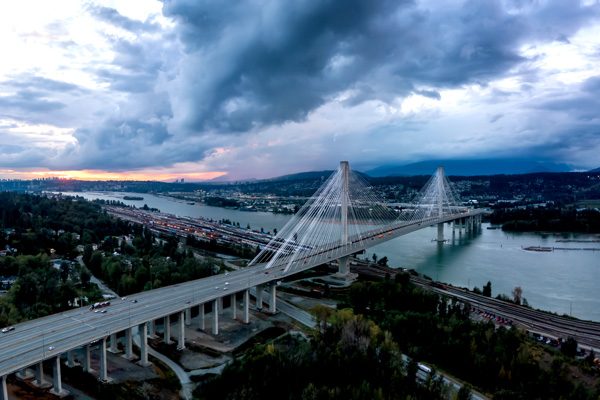
We create harmony between the built and natural environment
What we build can negatively impact the surrounding communities and environment. Likewise, the natural environment can have profound impacts on the things we build.
Empowered with a deep understanding of this balance, we help our clients create resilient structures and operations that fit within their unique location, terrain, and climate.
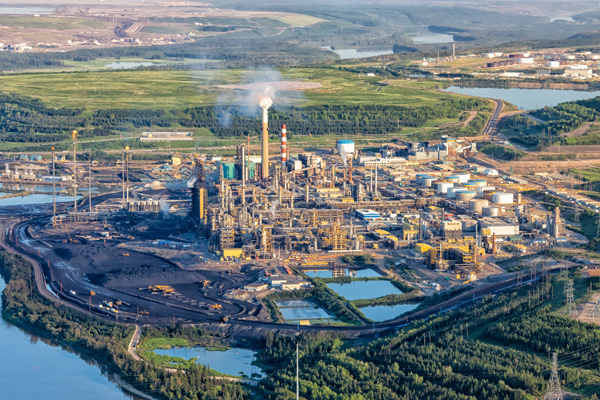
We engineer solutions for a changing climate
The rapidly changing climate presents complex challenges for the built environment. We combine a passion for sustainable and resilient design with decades of environmental experience for real, practical solutions to future-proof your project and meet your goals.
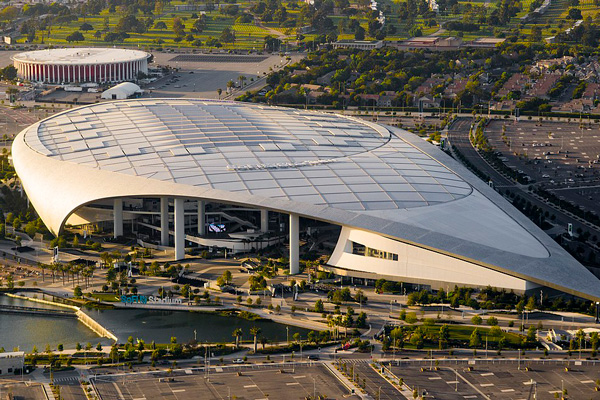
We create better human experiences
From design to operation, our human-centered approach focuses on engineering solutions that enhance the experience of individuals who occupy and use these spaces. We leverage technical expertise to deliver better human experiences leading to more intuitive, usable, and satisfying spaces.

We optimize for high performance results
We work with clients to develop practical, high performing solutions for buildings, infrastructure, and industry projects. We prioritize real-world performance data to go beyond structural codes.
This enhances safety, functionality, and longevity of structures and is especially crucial in a changing climate.
Our commitment to environmental sustainability
RWDI has valued sustainability throughout our decades-long company history. Over the past 50 years, we have been committed to upholding and strengthening all dimensions of resilient design, in both our work for clients and our own operations.
Now, as we continue to reduce the environmental impact of our operations with renewed vigor, our plan outlines how we will protect the environment, reduce our carbon footprint, and prevent waste and other forms of pollution.
Learn MoreA continuing legacy
RWDI has evolved dramatically over the past five decades, but the essence of who we are has remained the same since our beginning in 1972. Take a look back through time to learn about our continuing legacy.
Select:
RWDI Ventures launches Orbital Stack, a CFD software solution to complement RWDI’s consulting practice. This expansion into digital tools marked a major step toward integrating advanced simulation capabilities directly into clients’ design workflows.
GHG verification service developed to help clients meet climate change regulatory requirements. An offering that strengthened RWDI’s position as a trusted sustainability and environmental compliance advisor.
Virtualwind Inc. forms in Calgary to develop CFD software and simulate wind in the outdoor environment to allow for more efficient and accurate wind studies in urban and industrial settings.
Motioneering is launched and has consulted on hundreds of supplementary damping systems across the globe. Motioneering’s work has helped improve the safety and resilience of tall buildings everywhere.
RWDI AIR Inc. is officially established as the environmental services team within RWDI, which enabled the company to have a dedicated focus on air quality, emissions, and environmental risk management.
First Tuned mass damper study. RWDI designed and installed tuned mass dampers in the Oregon Convention Center’s tall glass spires. This project demonstrated the firm’s expertise in mitigating wind-induced motion in architectural structures.
The company’ begins internal ventilation and computational fluid dynamics (CFD) modeling, which marked a pivotal shift toward predictive simulation as a design tool in both indoor and outdoor environments.
Senior partners buy out the Guelph microclimate division of Morrison Hershfield and form Rowan Williams Davies and Irwin, Inc. (RWDI). The newly independent firm continued pioneering wind and environmental studies with renewed agility and focus.
First Aeroelastic study on a bridge (Alex Fraser (Annacis Island) in BC) sets a new benchmark for how wind impacts long-span bridge performance.
The first exhaust dispersion study was conducted with assistance from a contaminant sensor borrowed from the University of Toronto. This laid the groundwork for decades of air quality and emissions analysis.
The first wind tunnel study for a long-span bridge was for the Alex Fraser (Annacis Island) bridge in BC, the world’s longest cable-stayed bridge at the time. A landmark study that blended advanced modeling with practical engineering insight.
The first aeroelastic wind load study was done on the Bell Canada Tower in Montreal, Quebec. This groundbreaking work enhanced understanding of wind-structure interactions.
MHTR conducts first wind cladding study for York Adelaide Tower in three months, starting out using a box with a fan and working 100-hour weeks. This early success story underscored the team’s dedication, creativity, and problem-solving under pressure.
MHTR conducts first pedestrian-level wind study, which introduced new methods for assessing comfort and safety around high-rise developments.
Bill Rowan joins Jim Burgess and Frank Theakston to form MHTR, the first step in what would eventually become a dynamic new company poised to change the engineering industry. Snow-control studies are conducted in an open channel water flume. These early experiments signaled a new era in wind engineering, grounded in curiosity.
What makes us unique
Whether we’re helping to execute a design no one has attempted before, or meticulously completing the due diligence of regulatory compliance, we consistently demonstrate RWDI’s trademark obsession with detail. We fine-tune the data and get the nuances exactly right, and then we translate that technical rigor into concrete, sustainable solutions.
At RWDI, we maintain a vital, two-way dialogue throughout your project as we test, learn, and refine our shared understanding. We won’t deliver the results and leave you to interpret on your own. The outcome is a truly collaborative partnership in which we adapt and innovate together, sharing ideas and tracking the measures of progress with transparency, accountability, and mutual trust.
Our diverse team is united by a commitment to earning client trust and exceeding expectations through strong leadership and sustainable innovation. We blend creativity with careful attention to detail, prioritizing both human well-being and environmental integrity to craft solutions that redefine what’s possible and enhance community responsibility.
A firm committed to redefining possible has to be as nimble, responsive, and creatively disruptive as a startup. We encourage all members of the RWDI team to embrace the ingenuity of our founders as we constantly rethink the criteria for success. And when we grow, it’s not to get bigger, but to be better. We thoughtfully invest in added capabilities that complement what we already do and open new opportunities for excellence.
Video showing RWDI's testing tools juxtaposed against real world scenarios.
State-of-the-art
global Climate Labs
RWDI is the only engineering consulting firm globally with full scale Climate Labs, including our world-renowned wind tunnels. Our Labs mean our clients can replicate and plan for real-world conditions, helping them make more informed design decisions.
See the extraordinary capabilities that set us apart.
Innovation for tomorrow
RWDI Ventures is our startup incubator. Developing innovative standalone products and technology companies that leverage RWDI’s decades of experience and assets, RWDI Ventures is changing the world.
Explore our venture companies below: