Originally published: July 2023
Last update: May 2026
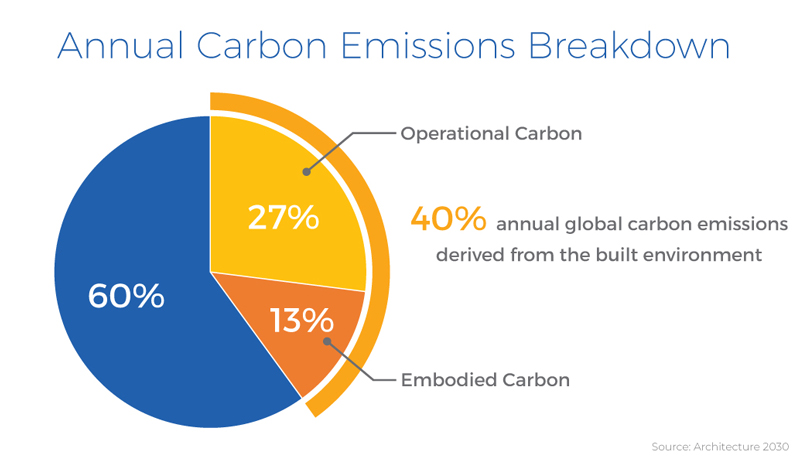
Carbon emissions are a major contributor to climate change, and the built environment is responsible for approximately 40% of the world’s annual carbon emissions. This is precisely why industry organizations and companies around the world are setting carbon reduction and net zero goals.
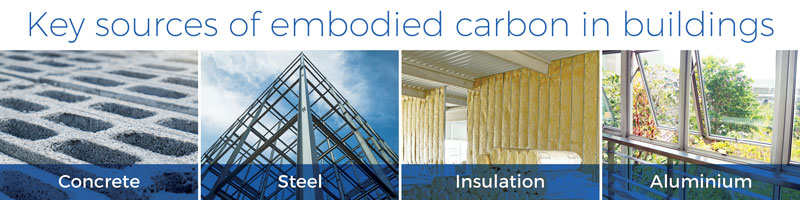
A key source of carbon emissions for buildings, and by extension a major influence on carbon reduction goals, is embodied carbon in buildings. Understanding how embodied carbon works, why reducing it matters, and what strategies exist to lower it is now essential for developers, designers, and engineers alike.
What Is Embodied Carbon in Buildings?
Embodied carbon refers to the carbon dioxide emissions resulting from the production, transportation, construction, maintenance, and end of life processes of building materials. It is one of two key sources of carbon from a building’s overall lifecycle carbon footprint – the other being operational carbon.
Carbon emissions from a building’s energy consumption – that is, energy resulting from activities such as the operation of elevators, lights, and air conditioning systems – are known as operational carbon.
Unlike operational carbon, which can be reduced over a building’s lifetime through efficiency upgrades and clean energy, embodied carbon is generally locked in from the start. This makes early-stage decisions in design and material selection critical.
Why You Should Reduce Embodied Carbon in Your Buildings
The changing climate has highlighted the need for the world to reduce its carbon emissions. Historically, the focus has primarily been on operational carbon for reducing overall carbon emissions. However, as both residential and commercial buildings are becoming more energy efficient, greater emphasis is being placed on reducing embodied carbon, as it remains a major source of emissions for the buildings sector.
As a result, there are several reasons to prioritize reducing embodied carbon in buildings through the design and construction process.
Impact on the Climate Crisis
While building for a growing population is crucial, so too is responding to the climate crisis. Architecture 2030 indicates that out of the approximately 40% of annual global carbon emissions the built environment is responsible for, embodied carbon accounts for 13%. Furthermore, reports show embodied carbon is expected to account for 50% of the carbon footprint of new buildings by 2050.
Carbon emissions generated today, including the embodied carbon of buildings, will contribute to the increasing effects of climate change down the road, including extreme temperatures, more severe weather events, loss of biodiversity, impacts to our food systems, and increased droughts.
Role in Building Sustainability Standards
Reducing embodied carbon is rapidly becoming part of many building sustainability regulations and certification programs, including LEED, California Bill AB 2446, the Canada Green Building Council’s Zero Carbon Buildings standard, Federal green procurement policies, and municipal development standards, such as the Toronto Green Standard.
The World Green Building Council has set a goal for all new buildings: net zero operational carbon and a 40% reduction in embodied carbon by 2030. Some standards and regulations include hefty fees for buildings that fail to meet them. Similarly, the Science Based Targets Initiative, which aims to help companies set climate targets and transition to a low-carbon economy, has recently released guidelines for the buildings sector including emphasis on reducing carbon emissions in construction.
Obtain Government Incentives
Governments at multiple levels are now offering concrete financial incentives to developers who reduce the embodied carbon of their buildings, and the programs are becoming more generous as time goes on.
Toronto Green Standard – Embodied Carbon Incentives: The Toronto Green Standard offers development charge refunds for projects that achieve Tier 2 performance or higher. Recent updates to the program introduced embodied carbon intensity requirements for new residential construction as part of broader low-carbon building performance criteria. Eligible projects can receive development charge refunds ranging from approximately $2,700 to over $10,000 per dwelling unit, depending on the unit type and TGS tier achieved, making it one of the most significant municipal incentives supporting low-carbon construction in Canada.
Canada Green Buildings Strategy: The Canada Green Buildings Strategy identifies low-carbon construction materials and “Buy Clean” procurement as a national priority. The strategy supports funding and policy mechanisms that favour buildings constructed with low embodied carbon materials, including domestic sourcing to further cut transportation-related emissions.
Inflation Reduction Act (US): For projects in the United States, the Inflation Reduction Act of 2022 includes $2.15 billion in available funds to procure low carbon materials for construction and renovation projects, alongside grants, tax incentives, and loans for energy-efficient and climate-resilient buildings.
Future Regulatory Direction
Canada is moving toward broader building carbon regulation, potentially expanding beyond operational energy efficiency requirements to include a tiered embodied carbon framework anticipated for the 2030 National Building Code of Canada. The initial focus is on upfront carbon (life cycle stages A1–A3), covering raw material supply, transportation, and manufacturing of major building material packages such as building structure and envelope.
Boost Building Revenue
Reducing embodied carbon is a crucial component of developing sustainable, low carbon buildings. These buildings may be more marketable to customers as the public becomes more aware of the climate impacts from buildings, which can result in the ability to achieve rent premiums. Many prospective tenants are now making climate mitigation and resiliency a priority, leading them to seek out low and zero carbon buildings to call home and support their own sustainability objectives.
Reduce Construction and Operation Costs
Reducing embodied carbon in buildings can offer building projects significant cost savings in several ways – a little bit of planning is all that’s required. Much of this relies on how embodied carbon reduction is achieved through low carbon building design, which often includes:
- optimizing the structure,
- reducing the quantities of high-emitting materials used,
- re-using building materials,
- selecting more sustainable, lower-carbon materials, and
- sourcing building materials locally.
These activities save money in multiple ways, including by avoiding the purchase of excess materials and reducing material transportation fees.
How to Calculate Embodied Carbon in Buildings
Changes in the climate and the resulting effects are major drivers behind decarbonization – of which reducing embodied carbon is a significant part. As developers, early planning and analysis are crucial to identify key opportunities to reduce embodied carbon – and this process starts with an estimate of your buildings’ embodied carbon.
Whole Building Life Cycle Assessment
A whole building life cycle assessment (LCA) looks at the quantities of materials and products used and their associated climate impact, from sourcing, through construction and use phase, and end of life disposal, to estimate the total embodied carbon of a building design.
This helps create a baseline estimate that can then be used to identify and inform reduction measures. LCAs are helpful for examining different strategies and the effects they will have on reducing carbon emissions in construction. For instance, after the baseline is established, further assessment can detail the impact of reducing underground parking, optimizing the building structure, or selecting different building materials on the project’s total embodied carbon.
LCAs open the door to truly examine the carbon impacts of design decisions and make informed adjustments before construction begins.
Environmental Product Declarations
Environmental product declarations (EPDs) are a key ingredient in the development of an LCA. In addition to helping facilitate the procurement process, they help developers understand the impacts of individual products, such as a steel product or concrete mix, on overall embodied carbon.
Ultimately, environmental product declarations give designers and developers transparency and allow them to make informed decisions at the product or material level, which can have a big influence when looking to reduce the building’s overall embodied carbon.
How To Reduce Embodied Carbon in Buildings
We know embodied carbon is a major source of carbon emissions from buildings and the built environment as a whole and this has a significant impact on the climate. Thankfully, there are quite a few ways to build more sustainably and significantly reduce embodied carbon.
Design for Material Efficiency
Designing to ensure you use materials as efficiently as possible can go a long way in reducing embodied carbon as well as project costs. Designing an efficient structure is also a benefit. For example, aligning the structural system of the building may reduce or eliminate the need for transfer slabs, which require a large volume of high-emitting concrete materials. Structural optimization can help designers use materials more efficiently, leading to carbon and even cost savings.
Build With Lower Carbon Materials
Building with low embodied carbon materials has the potential to significantly reduce a building’s embodied carbon. Options include using low carbon concrete or even alternative structural systems like mass timber or hollow core slabs. Instead of XPS insulation, alternatives like NGX insulation can also reduce embodied carbon. Additionally, steel sourced from an electric arc furnace and made with a high recycled content can also lower the overall embodied carbon.
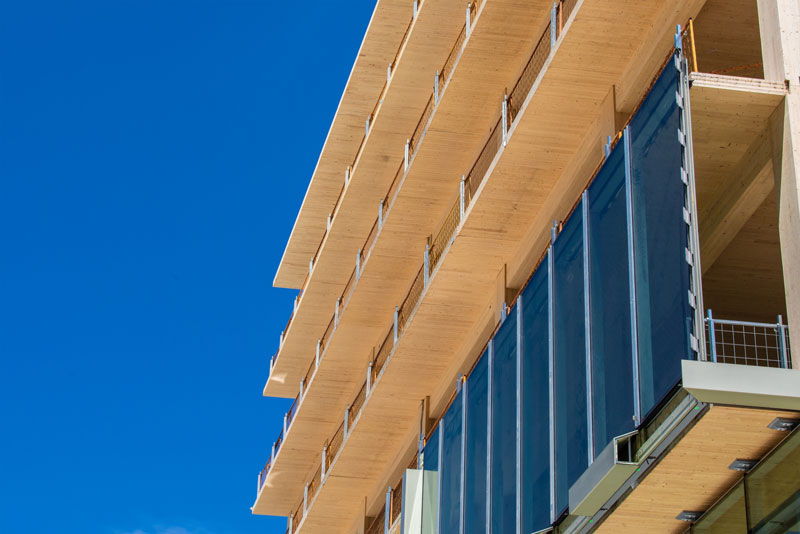
When choosing alternative materials to build with, it is also worth considering their carbon storing ability. Responsibly sourced wood products often have a less carbon intensive manufacturing process and store carbon in their lifecycle as well. As they grow, trees remove carbon from the atmosphere and store it in their mass. This is referred to a biogenic carbon storage – where carbon is stored in biological material like wood. Ultimately, because trees pull CO2 from the atmosphere, wood products often have a lower carbon footprint. Of course, any wood used should be harvested from a sustainable forest and end-of life disposal should be carefully considered to ensure the greatest benefits.
Minimize Underground Parking
Underground parking for residential buildings in urban environments is becoming less of a necessity as public transit systems are built out and become even more reliable. This is especially good news when looking to address embodied carbon in buildings and, ultimately, reduce a building’s embodied carbon.
An estimated 20 to 50% of concrete in a building is used below grade.
The use of concrete is often the highest when dealing with underground parking in residential buildings. Minimizing underground parking is so effective at reducing a building’s embodied carbon because it means using less carbon intensive materials, including concrete, rebar, and insulation.
Moving Forward with Embodied Carbon Reduction
The increasing effects of climate change have highlighted the need to rapidly reduce carbon emissions more than ever. This is magnified even more when the extent of buildings’ contributions to global carbon emissions are considered.
A strong plan to reduce embodied carbon in buildings starts with measuring and tracking these emissions. From there, developers and designers can apply targeted strategies that include anything from low carbon building design principles and whole building life cycle assessments to the selection of low embodied carbon materials to build a comprehensive reduction strategy.